Description
CHAPTER 1
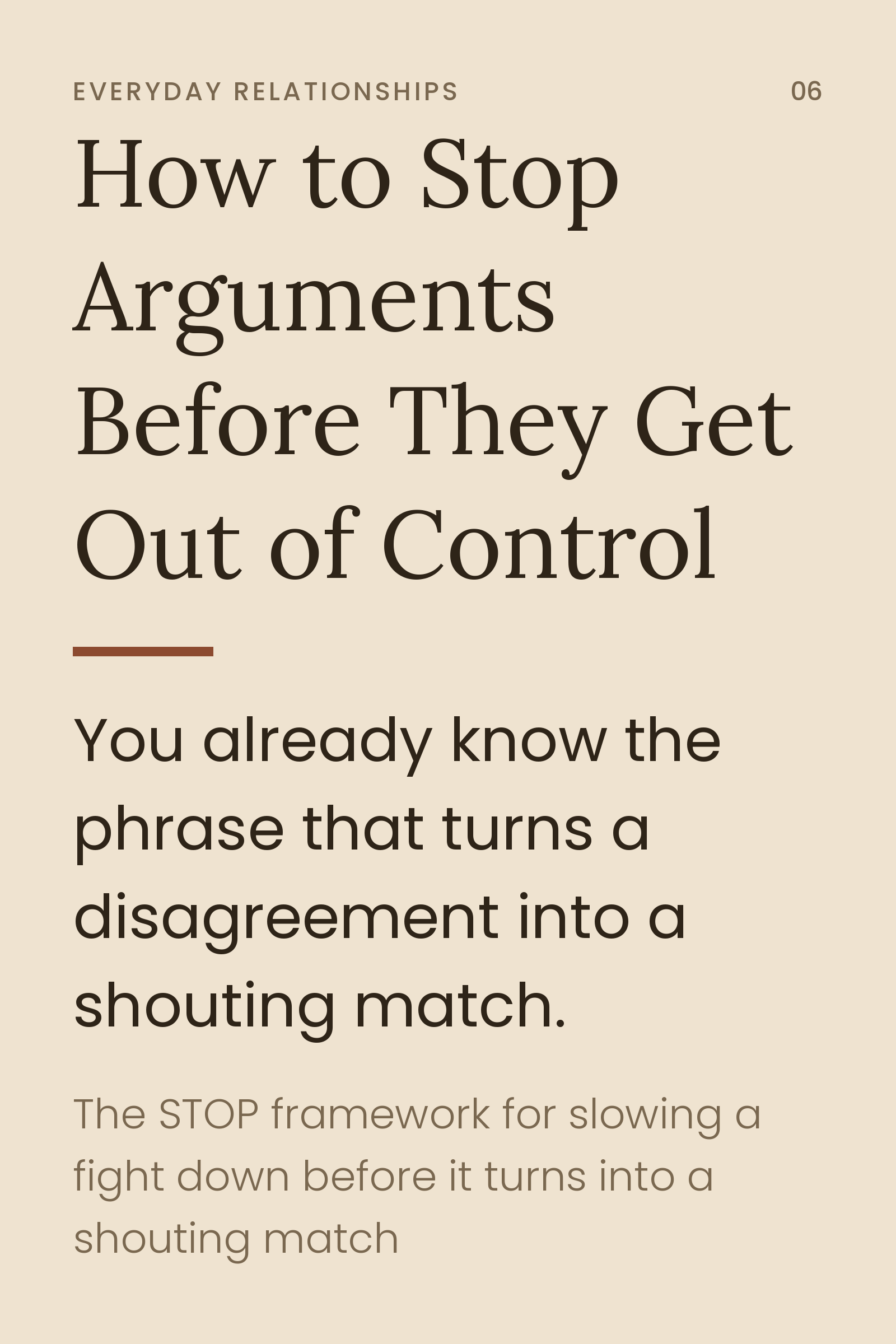
Learn Your Escalation Pattern
Arguments often follow a recognizable sequence. A trigger leads to tension, a familiar phrase, a defensive reaction, a louder response, and eventually behavior both people regret. Map your sequence so you can intervene earlier.
REAL-LIFE SITUATION
The familiar sequence
You already know the phrase that usually turns a disagreement into a shouting match.
WHAT TO DO
Identify your earliest intervention point.
WORDS YOU CAN USE
“”This is the point where we usually start escalating. I want to slow it down.'””
PRACTICAL STEPS
- Slow your pace.
- Listen for the underlying concern.
- Validate what is valid.
- Return to the issue if the conversation drifts.
COMMON MISTAKE
Treating validation as surrender.
ONE QUESTION TO ASK YOURSELF
What is the one problem we are actually trying to solve ?